Introduction
If you are researching the cost of a concrete driveway in Denver, you are likely planning a replacement or new installation. Naturally, one of the first questions homeowners ask is, “How much will it cost?”
While online searches often show broad national averages, driveway pricing depends on several local factors. In Denver, soil conditions, weather patterns, removal requirements, and site access all affect the final cost.
Therefore, instead of focusing on a single number, it helps to understand what influences driveway pricing and what you are paying for.
This guide breaks down the real cost factors behind residential concrete driveways in Denver so you can plan with confidence.
Average Concrete Driveway Cost in Denver
Concrete driveway costs in Denver typically range based on:
• Size of the driveway
• Thickness requirements
• Removal of existing concrete
• Reinforcement
• Site access
• Finish options
Because every property differs, pricing varies accordingly. For example, a simple straight driveway without removal costs less than a wide driveway requiring demolition and grading adjustments.
If you want a personalized estimate based on your property, you can request a detailed evaluation through our Free Concrete Quote in Denver page.
Cost Factor #1: Driveway Size and Square Footage
The most obvious cost factor is square footage. Larger driveways require more material, labor, and preparation time.
However, size is not the only consideration.
For example, irregular shapes, curves, or extended parking areas increase forming complexity. Additionally, wider driveways often require more reinforcement to support vehicle loads.
When comparing quotes, make sure square footage calculations match your actual layout.
Cost Factor #2: Removal of Existing Concrete
If you are replacing an old driveway, demolition becomes part of the project.
Removal includes:
• Breaking and hauling old concrete
• Disposal fees
• Site cleanup
• Regrading preparation
Older driveways that are heavily cracked or uneven require more labor during removal. Consequently, replacement projects typically cost more than new construction on fresh ground.
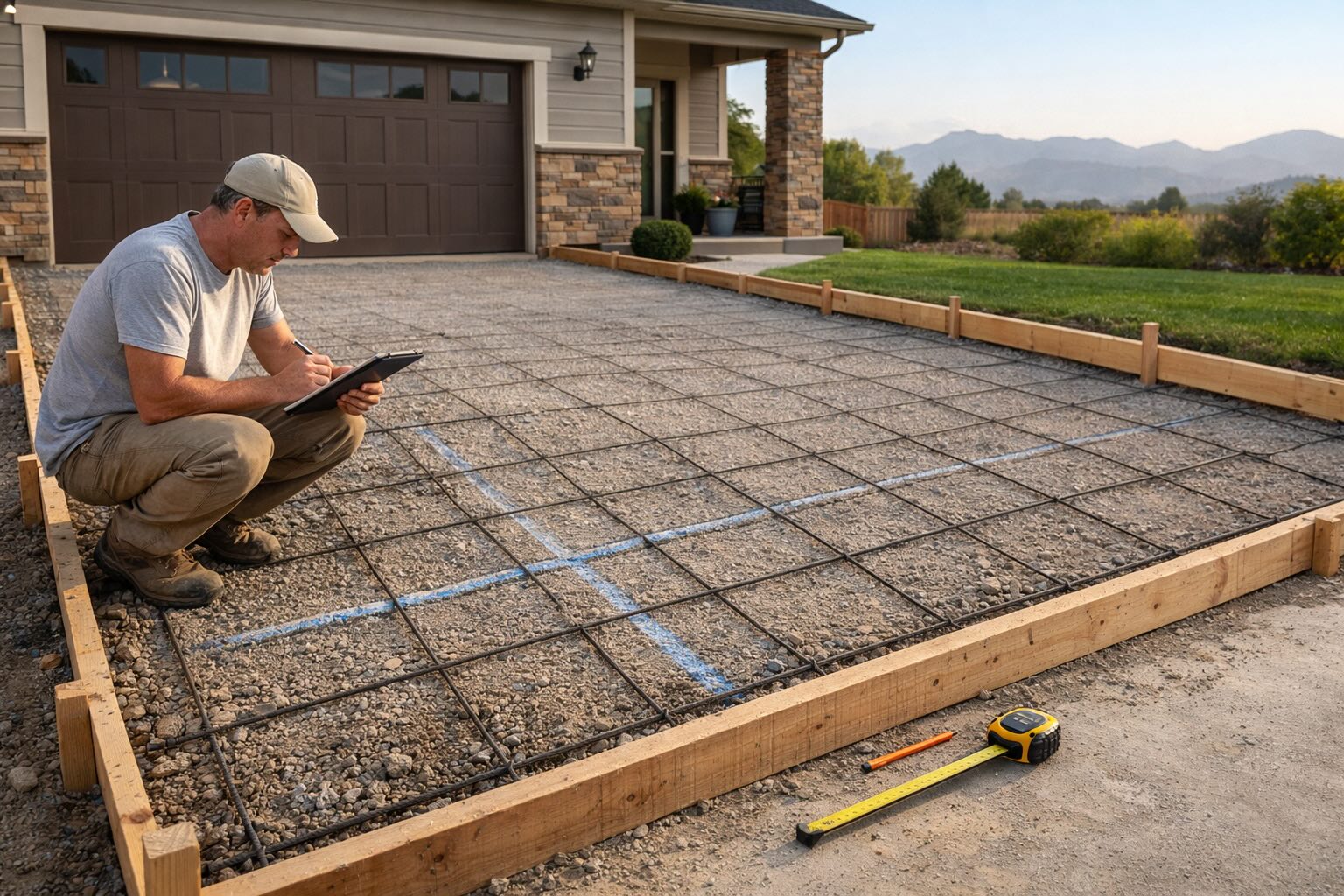
Cost Factor #3: Base Preparation
Base preparation plays a major role in durability. In Denver, freeze-thaw cycles and soil movement require proper compaction.
Preparation may include:
• Excavation
• Gravel or road base installation
• Mechanical compaction
• Leveling and grading
Although base work increases cost upfront, it protects the driveway long term. Skipping this step often leads to settling or cracking.
Cost Factor #4: Concrete Thickness
Standard residential driveways often use four inches of concrete. However, heavier loads or frequent vehicle traffic may require thicker slabs.
Increasing thickness increases material cost. Nevertheless, it may extend longevity.
Ask your contractor to explain thickness recommendations based on your property.
Cost Factor #5: Reinforcement Materials
Reinforcement strengthens concrete and helps control cracking.
Options may include:
• Rebar
• Wire mesh
• Fiber reinforcement
While reinforcement adds cost, it improves structural integrity. Therefore, discussing reinforcement details before installation is essential.
Cost Factor #6: Finish and Appearance
Concrete driveways can be finished in several ways.
Common residential finishes include:
• Standard broom finish
• Smooth finish
• Decorative borders
• Stamped concrete
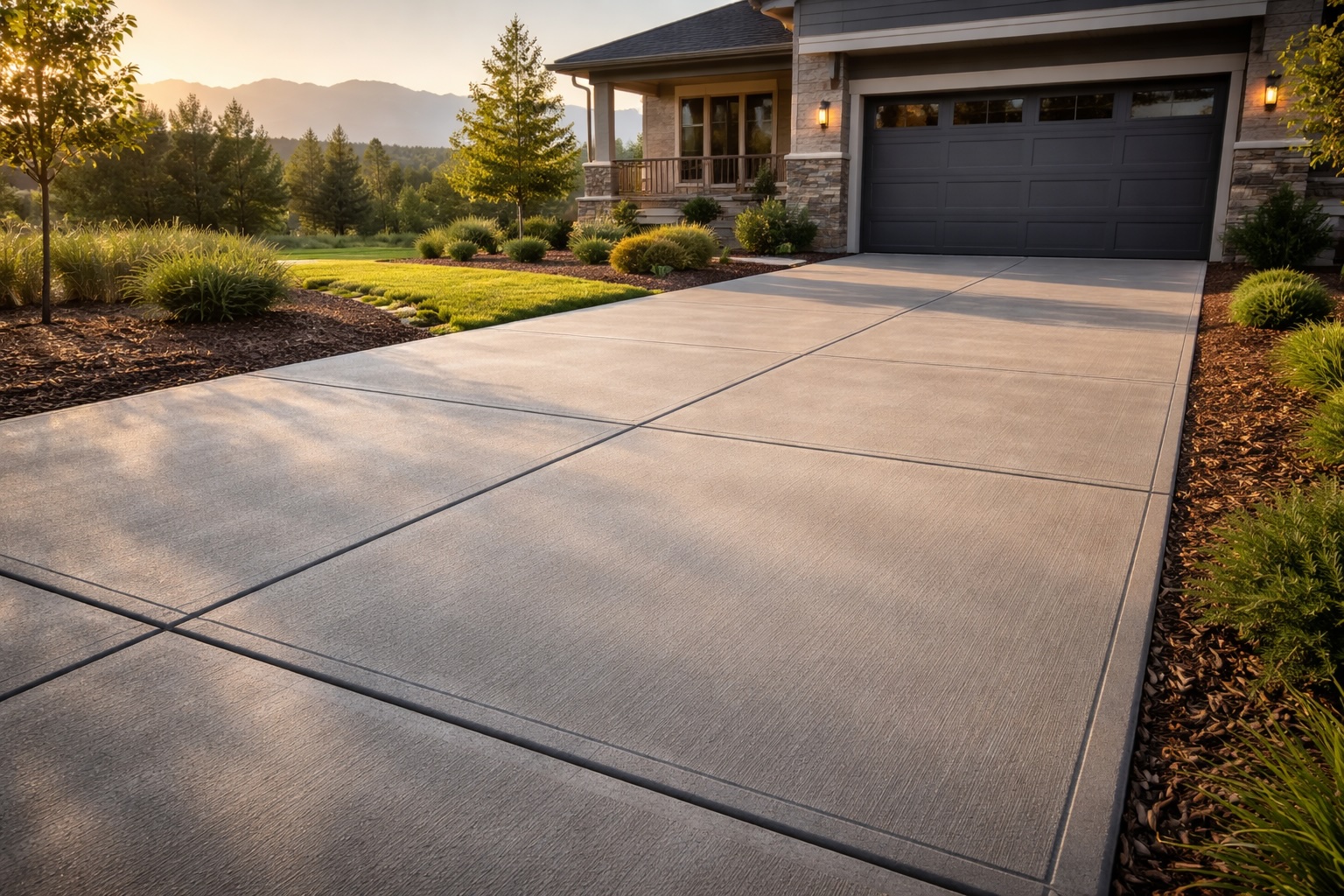
Decorative finishes increase labor and material costs. However, they also enhance curb appeal.
Before choosing a finish, consider maintenance and long-term appearance.
Cost Factor #7: Site Access
Not all driveways offer easy equipment access. Tight spaces, slopes, or limited street access can affect labor time.
For example, homes in established Denver neighborhoods sometimes require careful maneuvering. In those cases, labor adjustments influence final pricing.
Cost Factor #8: Permits and Local Regulations
Some areas require permits for driveway replacement. HOA guidelines may also affect dimensions or layout.
While permit costs are usually small compared to total project cost, they should still be considered.
What Homeowners Should Avoid
When comparing driveway estimates in Denver, avoid:
• Extremely low bids without details
• Unclear thickness specifications
• No reinforcement explanation
• No written scope of work
Transparent pricing reflects careful planning.
How to Budget for Your Driveway Project
Instead of searching for a fixed number online, plan based on:
• Size
• Site condition
• Desired finish
• Removal needs
Because every driveway differs, personalized evaluation provides clarity.
If you would like to understand your specific project cost, you can request a no-obligation estimate through our Free Driveway Quote Request page.
Long-Term Value vs. Short-Term Savings
Although cost matters, long-term durability matters more.
Concrete installed with proper preparation and reinforcement can last decades. Conversely, rushed work may require repairs far sooner.
Therefore, comparing value instead of just price protects your investment.
Final Thoughts
Concrete driveway cost in Denver depends on multiple factors. Size, removal, base preparation, reinforcement, and finish all influence pricing.
By understanding these elements, homeowners can evaluate estimates confidently.
If you are planning a residential driveway installation or replacement, you can begin with a detailed assessment through our Free Concrete Quote in Denver page.
Strong driveways start with informed decisions.