A concrete driveway does more than provide a place to park. It shapes first impressions, supports daily vehicle traffic, and affects long-term property value.
In Denver, climate adds another layer of importance. Freeze-thaw cycles, temperature swings, soil movement, and sun exposure all influence driveway durability. Because of these factors, installation quality matters as much as material choice.
If you are planning a new concrete driveway in Denver or replacing an older one, this guide explains everything you should know before moving forward.
If you would like a personalized evaluation for your property, you can request one through our Free Concrete Quote in Denver page.
Why Concrete Is a Popular Choice in Denver
Homeowners choose concrete driveways for several reasons.
First, concrete offers durability. When installed correctly, it withstands vehicle weight, weather exposure, and seasonal temperature changes.
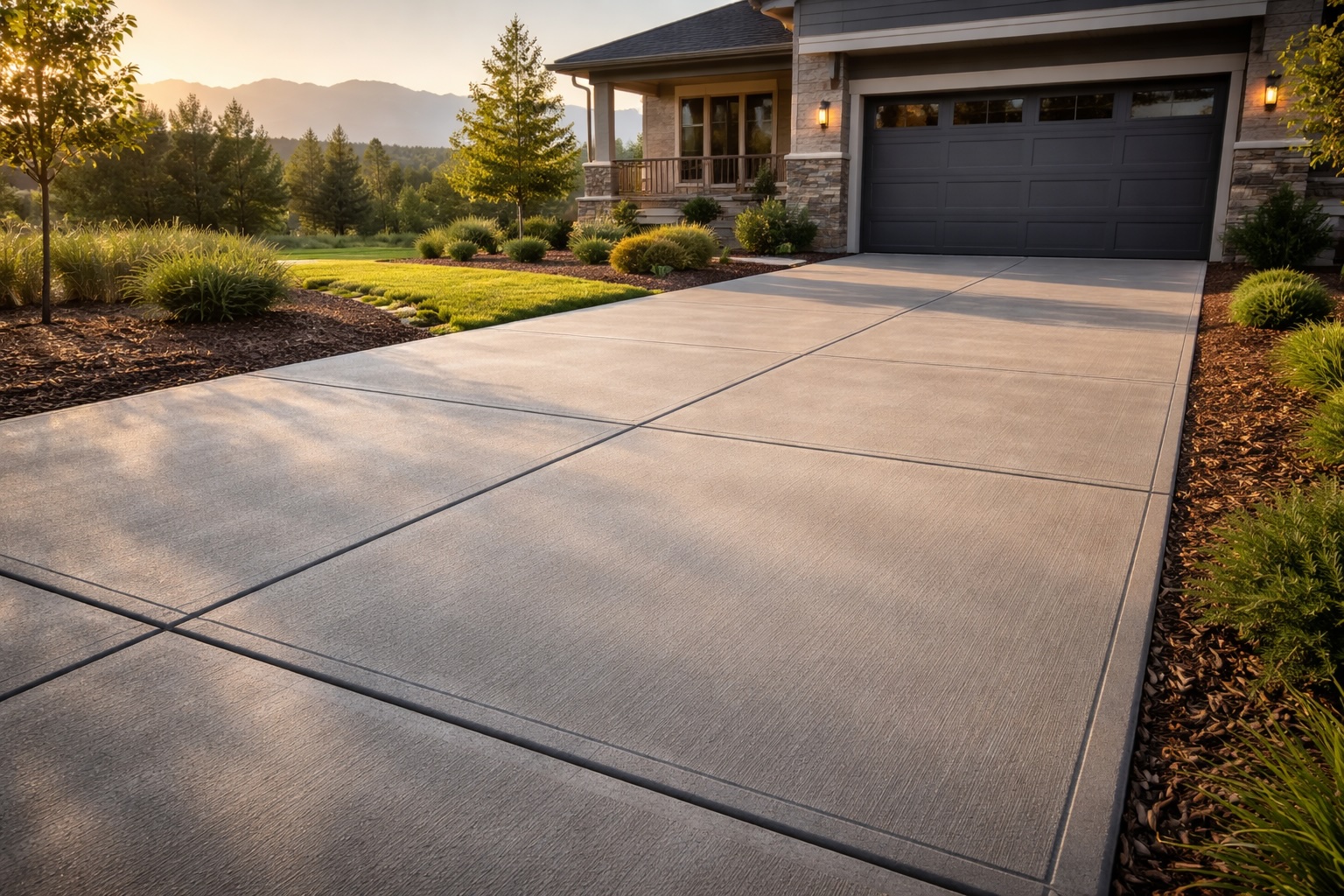
Second, concrete provides clean curb appeal. Its smooth lines complement modern and traditional homes alike.
Third, concrete requires relatively low maintenance compared to other driveway materials.
While asphalt remains common, many Denver homeowners prefer concrete for longevity and appearance.
How Denver’s Climate Affects Driveways
Colorado weather plays a major role in driveway performance.
Freeze-Thaw Cycles
Moisture enters surface pores during winter. When temperatures drop, water freezes and expands. As temperatures rise, it contracts.
Over time, repeated expansion and contraction create stress.
However, proper base preparation and joint placement help manage this natural movement.
Temperature Swings
Denver often experiences dramatic daily shifts. Warm afternoons may follow freezing mornings.
Because concrete expands and contracts with temperature, installation techniques must account for movement.
Sun Exposure
High elevation increases UV intensity. Therefore, sealing and proper finishing help preserve surface appearance.
Signs You Need to Replace Your Concrete Driveway
Not every crack requires full replacement. However, certain signs indicate replacement may be the better long-term solution.
Look for:
• Large structural cracks
• Sections that have sunk or shifted
• Drainage problems
• Surface scaling
• Widespread deterioration
When damage affects multiple areas, patching may only provide temporary improvement.
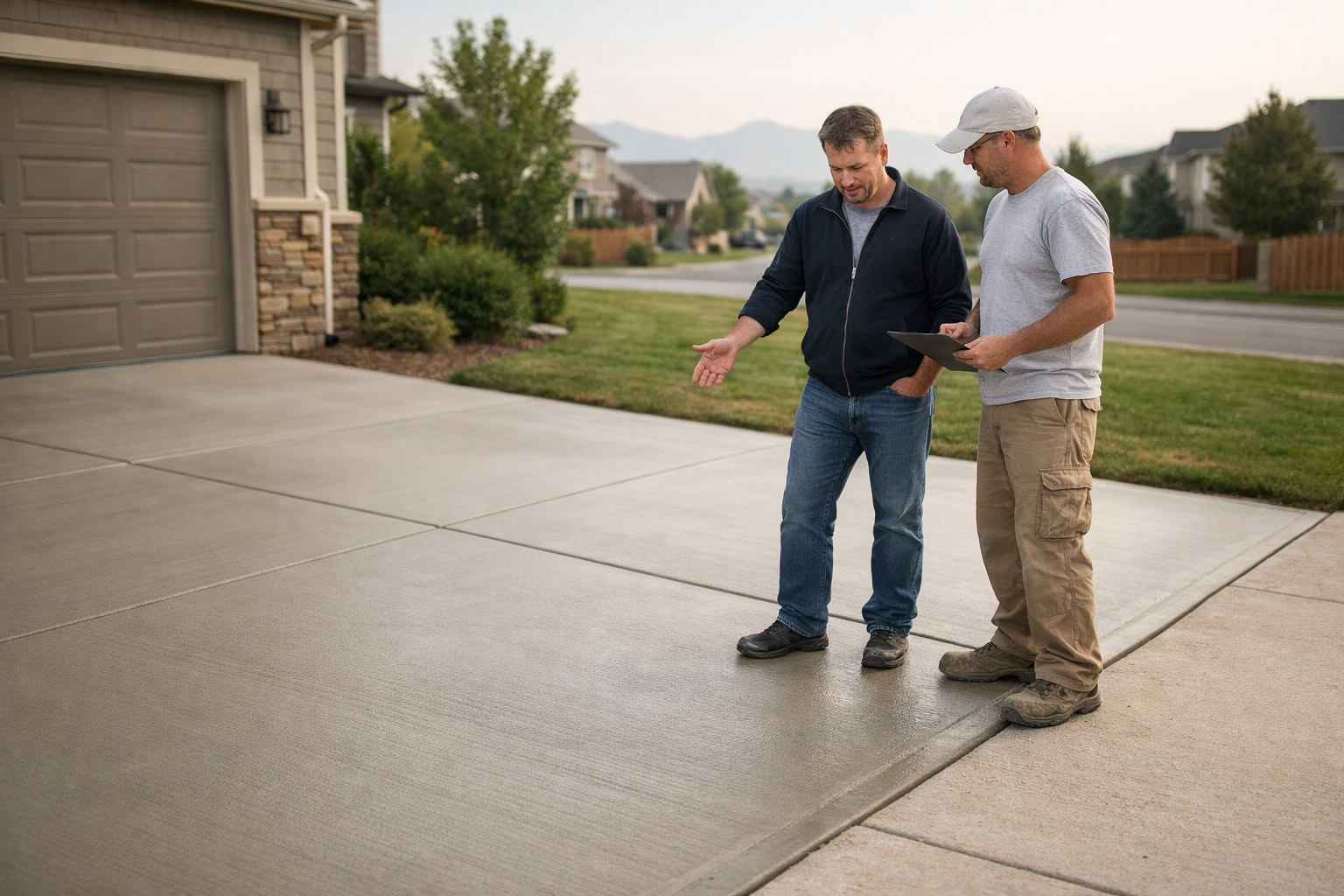
If you are unsure whether repair or replacement makes sense, you can request a site evaluation through our Free Driveway Estimate Page.
The Concrete Driveway Installation Process
Understanding the installation process helps homeowners evaluate contractor quality.
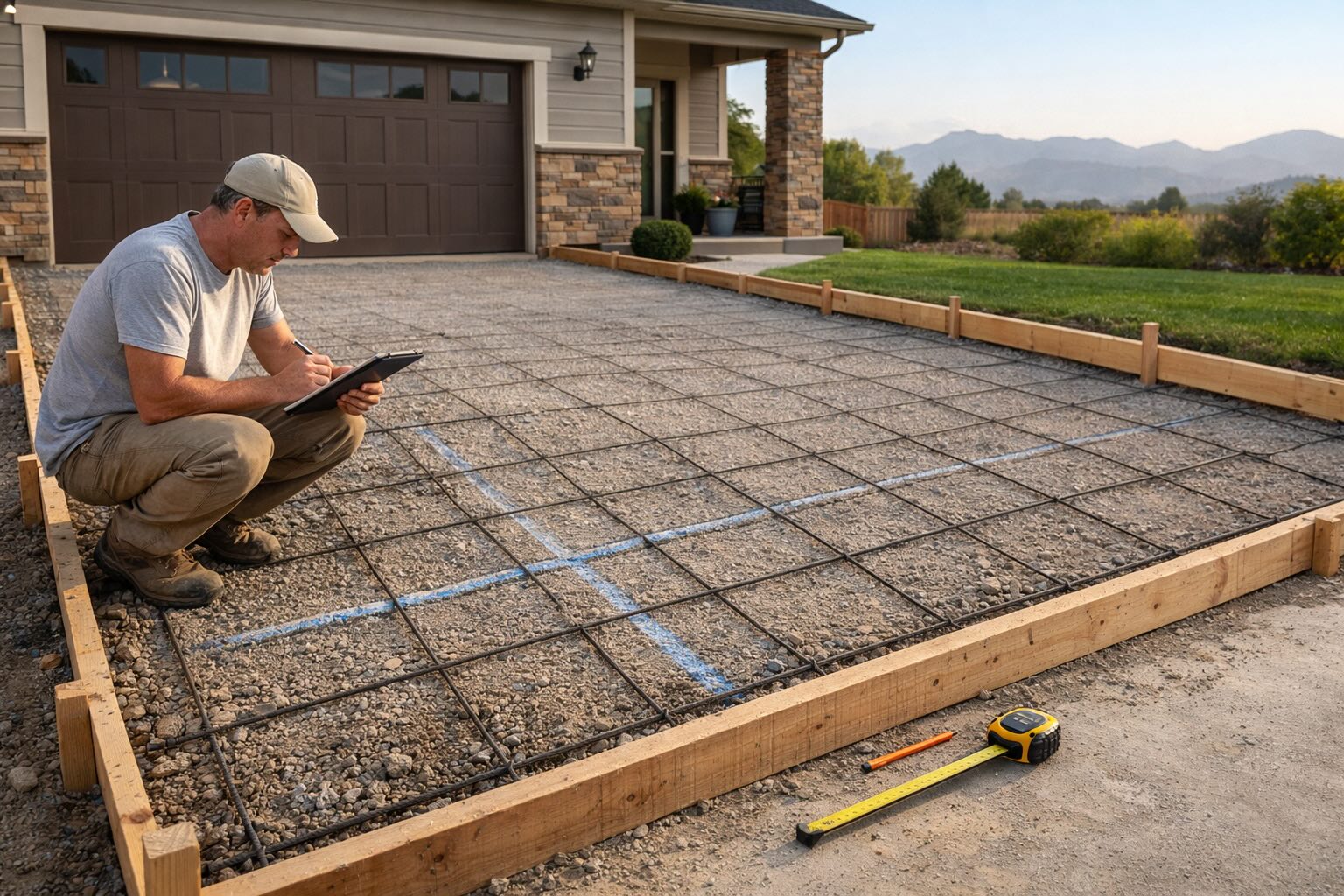
Step 1: Site Preparation
Proper preparation begins with excavation. Crews remove existing materials and ensure correct depth.
Next, they install a stable gravel or road base. Compaction follows to create a firm foundation.
Strong preparation protects against settling.
Step 2: Form Placement
Wood or metal forms outline the driveway shape. Accurate forming ensures clean edges and correct slope.
Proper slope directs water away from the home.
Step 3: Reinforcement
Reinforcement may include rebar, wire mesh, or fiber additives.
Reinforcement improves structural strength and helps control cracking.
Step 4: Pouring and Finishing
Crews pour concrete evenly and level it carefully. Finishing techniques determine surface texture.
Common finishes include:
• Broom finish for traction
• Smooth finish for modern appearance
• Decorative borders
Step 5: Control Joints
Control joints guide cracking to planned locations.
Strategic spacing protects appearance and durability.
Step 6: Curing
Curing allows concrete to gain strength gradually. Protecting the surface during this phase prevents premature damage.
How Thick Should a Concrete Driveway Be?
Most residential driveways use four inches of concrete.
However, thickness may increase if:
• Heavy vehicles use the driveway
• Soil conditions require additional strength
• Extended parking areas are included
Ask your contractor to explain thickness recommendations based on your specific property.
Concrete Driveway Cost in Denver
Concrete driveway cost in Denver varies based on:
• Size
• Removal requirements
• Base preparation
• Reinforcement
• Finish options
• Site access
While online averages provide rough estimates, actual pricing depends on property conditions.
If you want clarity based on your home layout, request a detailed assessment through our Free Residential Concrete Quote page.
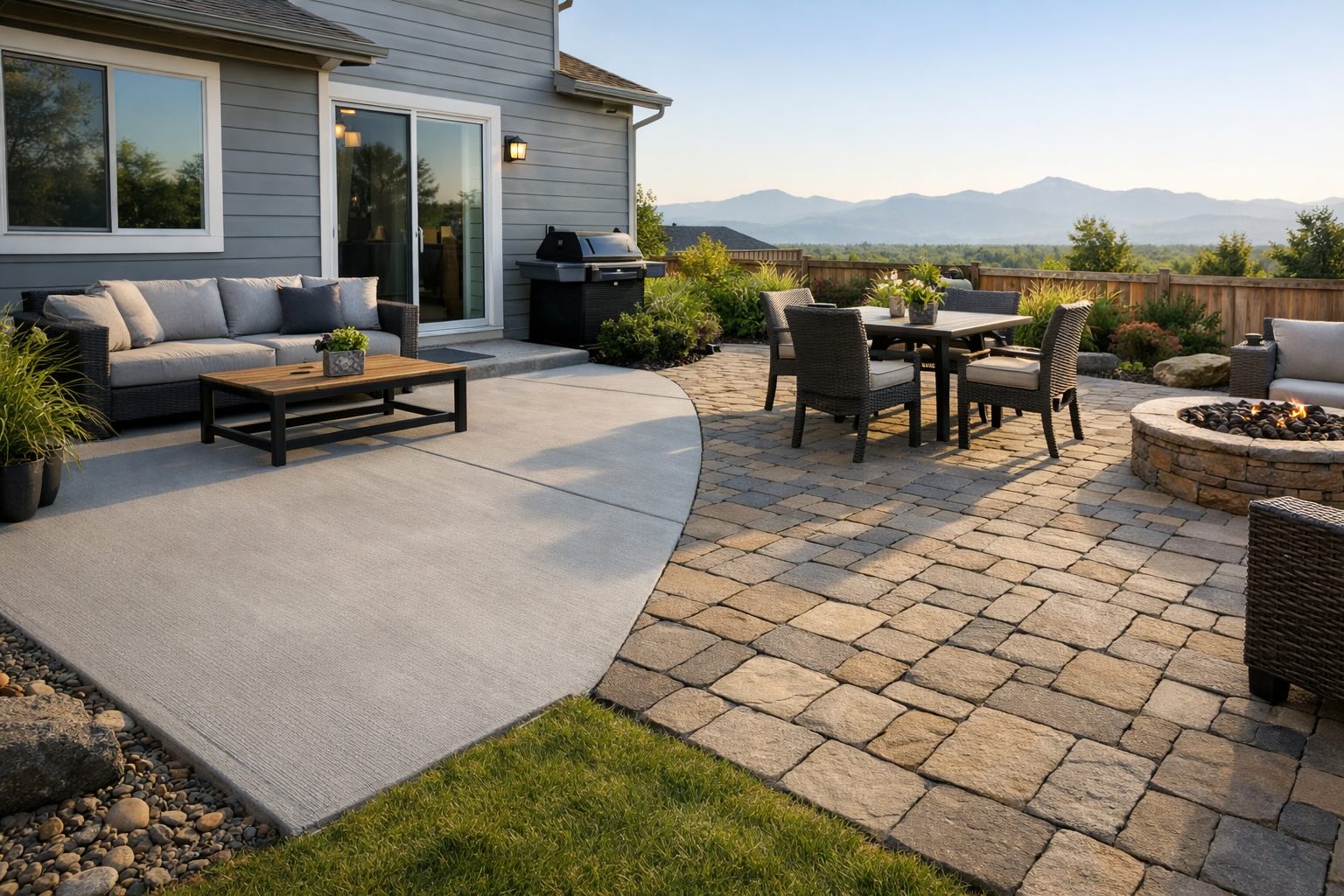
Decorative Concrete Options
Concrete does not have to look plain.
Many homeowners choose:
• Stamped patterns
• Colored finishes
• Decorative borders
• Exposed aggregate
Stamped concrete can replicate stone or brick textures while maintaining slab strength.
However, decorative finishes require careful installation to maintain durability in Denver’s climate.
Maintenance Tips for Long-Lasting Driveways
Proper maintenance extends driveway life.
Keep the Surface Clean
Regular cleaning prevents debris buildup.
Seal When Appropriate
Sealing protects against moisture penetration and UV exposure.
Monitor Small Cracks
Address minor cracks early before they expand.
Use Deicing Products Carefully
Some chemicals accelerate surface wear. Follow product guidelines during winter.
Repair vs. Replacement: How to Decide
Minor cracks often respond well to repair. However, widespread structural issues usually justify replacement.
Consider replacement if:
• Multiple sections have sunk
• Drainage fails
• Cracks run deeply
• Edges crumble significantly
Professional evaluation clarifies which option provides better long-term value.
Why Hiring the Right Contractor Matters
Concrete installation depends on preparation, reinforcement, and finishing quality.
When reviewing options, look for:
• Clear scope of work
• Detailed preparation plan
• Reinforcement transparency
• Proper curing timeline
• Respect for your property
Choosing a contractor based solely on price often leads to disappointment.
Instead, focus on experience with residential concrete driveways in Denver.
How Long Does a Concrete Driveway Last?
With proper installation and maintenance, a concrete driveway can last decades.
Longevity depends on:
• Installation quality
• Climate exposure
• Maintenance practices
• Load weight
Strong preparation at the beginning often determines performance years later.
Planning Your Driveway Project
Before scheduling installation:
- Evaluate current condition.
- Determine size and layout changes.
- Consider decorative preferences.
- Review budget expectations.
- Schedule evaluation.
Because Denver weather influences scheduling, early planning helps avoid delays.
If you are ready to explore your options, begin with a no-obligation estimate through our Free Concrete Driveway Quote page.
Final Thoughts
Concrete driveways remain one of the most durable and practical choices for Denver homeowners.
However, climate conditions require careful planning. Freeze-thaw cycles, temperature swings, and soil movement all influence performance.
By understanding installation steps, thickness requirements, cost factors, and maintenance practices, homeowners can move forward confidently.
If you are considering a new concrete driveway in Denver, start with clear information and proper evaluation. Strong driveways begin with strong preparation.
You can request a personalized assessment through our Free Residential Concrete Quote page.