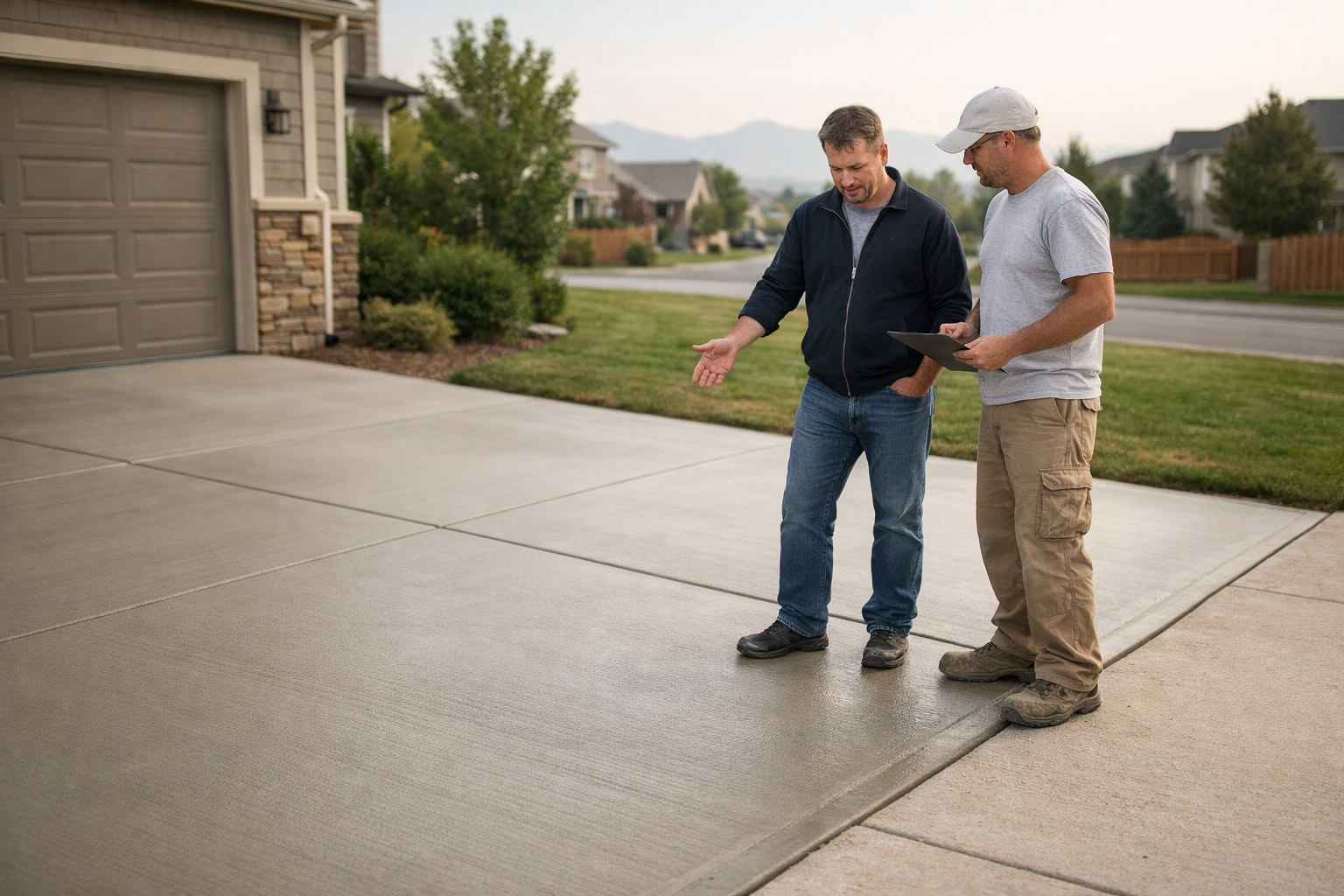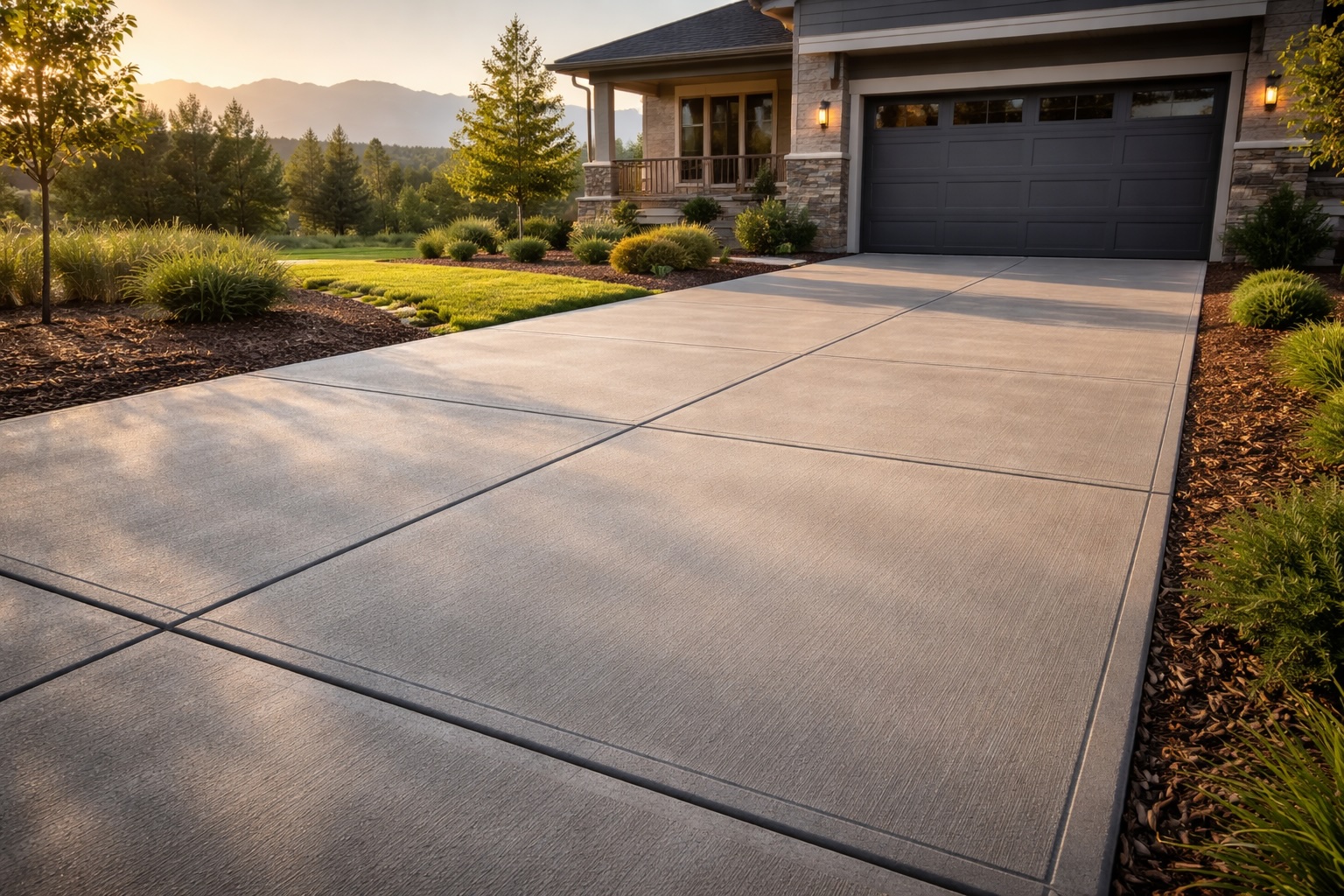
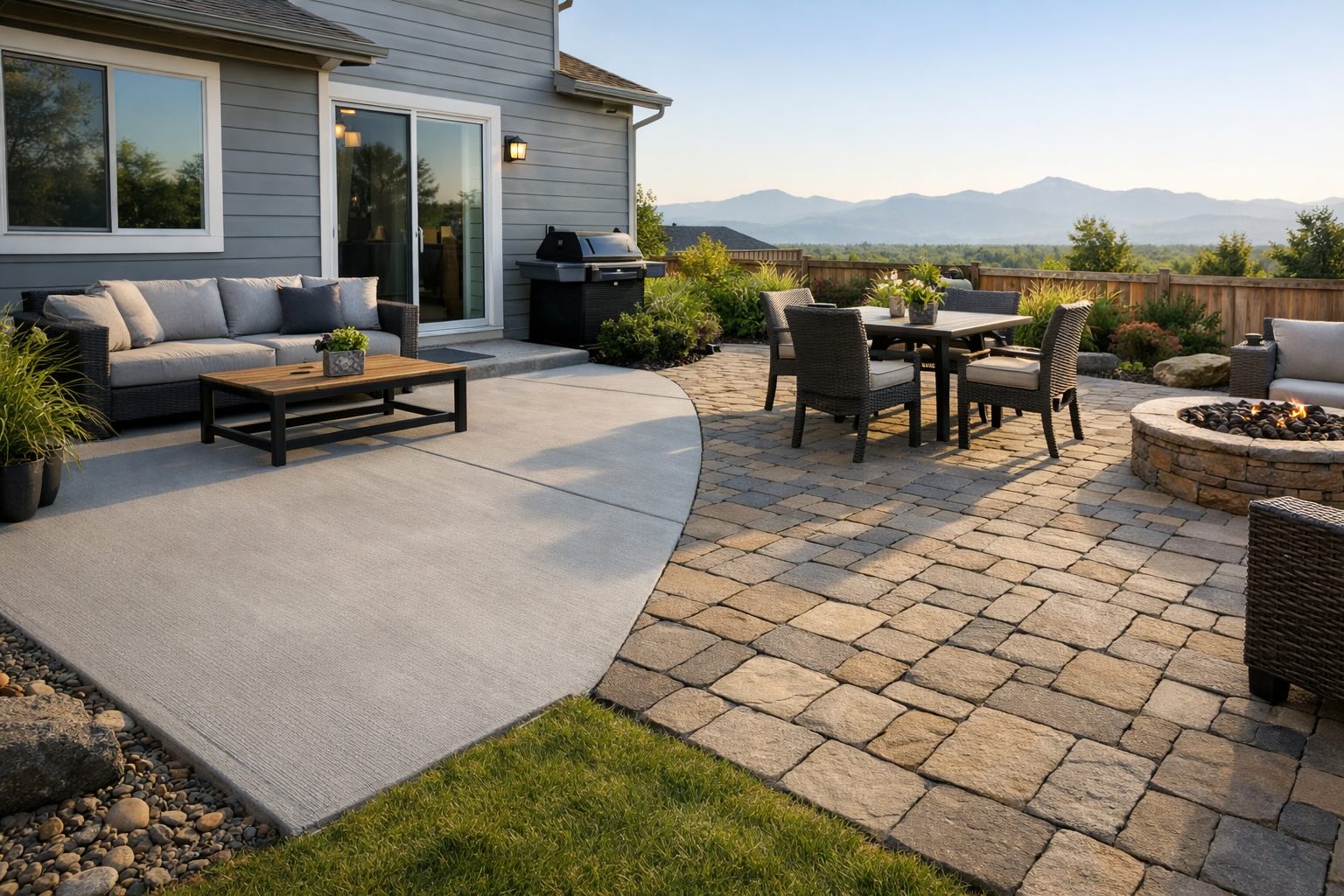
If you are planning a new patio in Denver, one question often comes up first: Should you choose concrete or pavers?
Both options can create beautiful outdoor spaces. However, they perform differently in Colorado’s climate. Because Denver experiences freeze-thaw cycles, snow, sun exposure, and shifting soil conditions, patio material matters more than many homeowners realize.
Before making a decision, it helps to compare durability, maintenance, cost, and long-term value. This guide breaks down the differences clearly so you can choose what fits your home and budget.
If you would like personalized guidance for your property, you can always request a detailed estimate through our Free Residential Concrete Quote page.
Understanding Concrete Patios
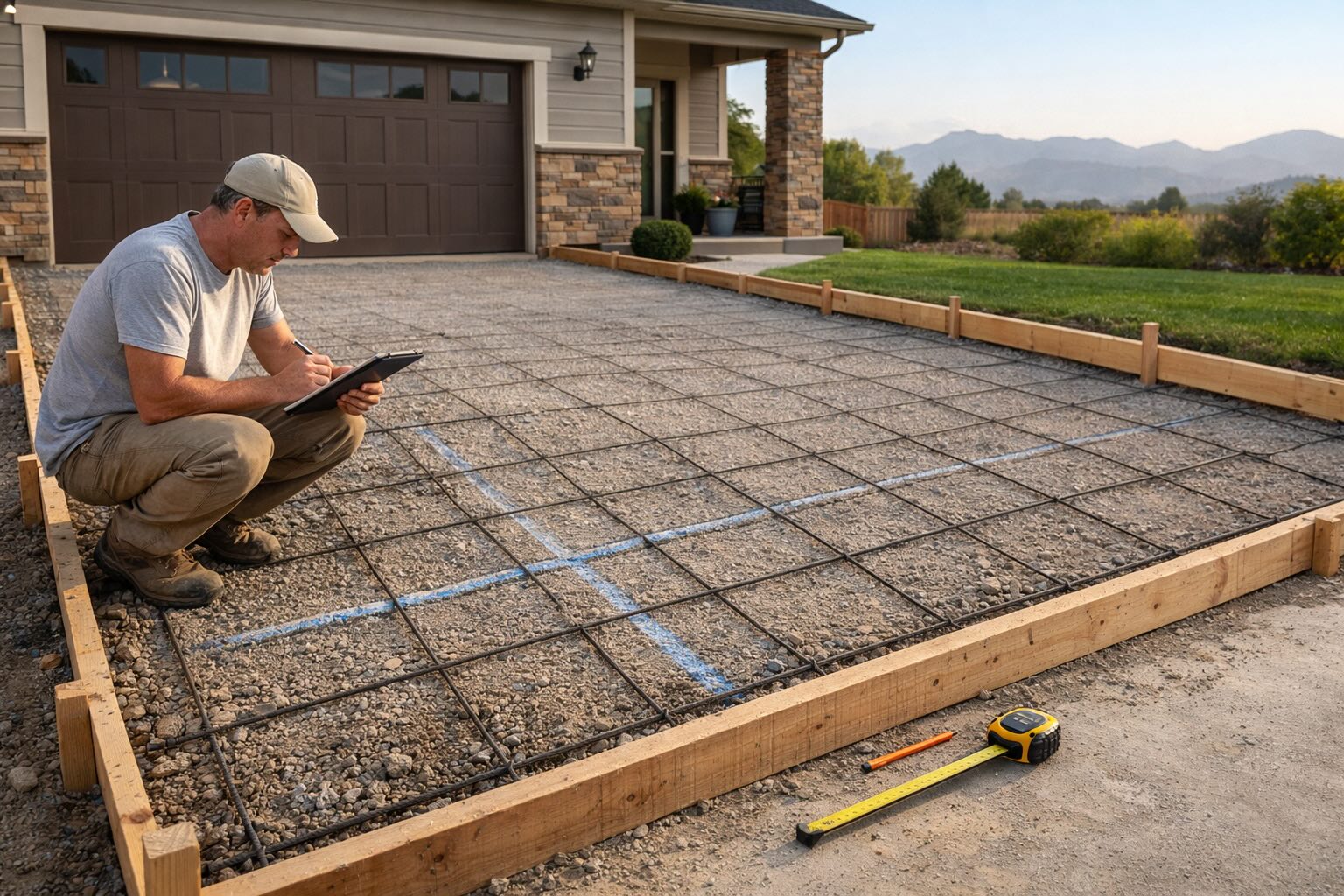
A concrete patio is poured as a single slab. Contractors prepare the base, install forms, add reinforcement, and pour concrete into place. Once cured, the slab becomes a solid, continuous surface.
Concrete patios can be finished in several ways:
• Standard broom finish
• Smooth finish
• Decorative borders
• Stamped concrete patterns
• Colored concrete
Because concrete creates a unified surface, it offers strength and structural consistency.
Understanding Paver Patios
Pavers consist of individual units made from concrete, brick, or stone. Installers prepare a compacted base and sand layer before placing pavers individually.
Unlike poured concrete, pavers are modular. Each piece sits next to the other, with sand-filled joints in between.
Pavers offer design flexibility. Homeowners can choose different shapes, textures, and patterns.
However, modular systems behave differently than solid slabs over time.
Durability in Denver’s Climate
Colorado weather plays a major role in patio performance.
Freeze-Thaw Cycles
During winter, moisture can enter small gaps. When temperatures drop, water expands as it freezes. Over time, this expansion stresses materials.
Concrete patios, when properly installed with expansion joints and reinforcement, manage freeze-thaw cycles effectively.
Pavers can shift if the base is not perfectly compacted. Additionally, joint sand may wash out over time, which increases movement risk.
Sun Exposure
Denver receives strong sunlight year-round. UV exposure can fade certain pavers, especially lower-quality materials.
Concrete typically maintains color consistency, particularly when sealed properly.
Installation Process Differences
Concrete Patio Installation
Concrete installation involves:
- Excavation
- Base preparation
- Form placement
- Reinforcement
- Pouring and finishing
- Curing
Because the slab is poured at once, installation usually takes fewer days than paver installation.
Paver Installation
Paver patios require:
- Excavation
- Base preparation
- Sand leveling
- Individual placement
- Joint sanding
- Compaction
Although both require preparation, paver installation typically involves more individual placement labor.
Maintenance Requirements
Maintenance is where many homeowners begin to see differences.
Concrete Patio Maintenance
Concrete patios generally require:
• Occasional cleaning
• Sealing every few years (optional but recommended)
• Minor crack monitoring
When installed properly, concrete remains stable. Small hairline cracks may occur naturally, but proper joint placement helps control them.
Paver Patio Maintenance
Paver patios may require:
• Replacing joint sand
• Resetting shifted pavers
• Weed removal between joints
• Re-leveling sections
Because pavers are individual units, shifting and settling can happen if base preparation was imperfect.
Over time, this maintenance can add up.
Cost Comparison in Denver
Cost often influences the final decision.
While pricing varies by size and design, general considerations include:
• Concrete is typically more cost-effective per square foot.
• Decorative stamped concrete increases price but remains competitive.
• Pavers often cost more due to material and labor intensity.
However, site conditions affect pricing significantly.
If you want an accurate assessment based on your yard layout, slope, and design goals, request a custom evaluation through our Free Patio Quote Page.
Aesthetic Considerations
Both options can look attractive.
Concrete Patio Aesthetics
Modern concrete offers:
• Clean lines
• Smooth contemporary finishes
• Decorative stamping
• Custom borders
• Neutral tones
Stamped concrete can mimic stone, brick, or tile patterns while maintaining slab integrity.
Paver Aesthetics
Pavers offer:
• Modular pattern variety
• Color mixing
• Natural stone appearance
• Individual replacement flexibility
Some homeowners prefer the segmented look of pavers. Others prefer the seamless appearance of concrete.
Design preference matters.
Long-Term Stability
When evaluating patio materials, consider long-term performance.
A properly reinforced concrete patio acts as a single structural unit. Movement in one section does not easily affect the entire slab.
In contrast, pavers depend heavily on base consistency. Even small shifts can create uneven surfaces.
In Denver’s freeze-thaw climate, stability becomes especially important.
Repair and Replacement
Concrete Repairs
Small cracks can often be sealed. In severe cases, sections can be replaced.
However, when concrete is installed correctly, major repairs are less common.
Paver Repairs
Pavers offer the advantage of individual piece replacement. However, ongoing shifting can require repeated maintenance.
Homeowners should weigh ease of replacement against frequency of adjustment.
Drainage Considerations
Proper drainage protects patios from premature wear.
Concrete patios require careful slope planning during installation. Once poured, slope remains consistent.
Paver patios allow water to move between joints. However, improper grading beneath can lead to uneven settling.
In both cases, professional planning prevents long-term issues.
Which Is Better for Denver Homes?
The answer depends on:
• Budget
• Design goals
• Maintenance expectations
• Long-term stability priorities
For homeowners seeking durability, cost-efficiency, and low maintenance, concrete patios often provide strong value.
For those prioritizing modular design and pattern flexibility, pavers may appeal.
However, because Denver weather challenges patio materials year-round, installation quality matters more than material choice alone.
Making the Right Decision
Before committing, ask:
What is the expected lifespan?
How will it perform in winter?
Will maintenance be required?
How does it affect long-term property value?
A clear understanding helps you avoid regret later.
If you are considering a new patio in the Denver Metro area, start by understanding your site conditions. Then evaluate material options carefully.
You can request a personalized assessment through our Free Residential Concrete Quote page to explore what works best for your property.
Final Thoughts
Concrete and pavers both offer benefits. However, Denver’s climate places stress on outdoor surfaces. Durability, proper preparation, and reinforcement play critical roles.
When installed correctly, a concrete patio delivers strength, clean design, and long-term performance.
Ultimately, the right choice balances budget, aesthetics, and maintenance expectations.
If you are ready to plan your patio project, begin with a clear evaluation so you can move forward confidently.