Denver homeowners often ask how Colorado weather affects concrete. The question makes sense. Unlike mild climates, Colorado experiences wide temperature swings, freeze-thaw cycles, snow, intense sun, and sudden storms.
Because concrete reacts to moisture and temperature changes, climate directly impacts durability. However, weather alone does not cause most problems. Instead, installation quality and preparation determine how well concrete performs over time.
If you understand how local conditions influence residential concrete in Denver, you can plan smarter and avoid costly repairs later.
This guide explains what every homeowner should know before installing a driveway, patio, or slab in the Denver Metro area.
If you would like a personalized evaluation based on your property conditions, you can request one through our Free Residential Concrete Quote page.
Understanding Freeze-Thaw Cycles in Denver
One of the most significant climate factors in Colorado is the freeze-thaw cycle.
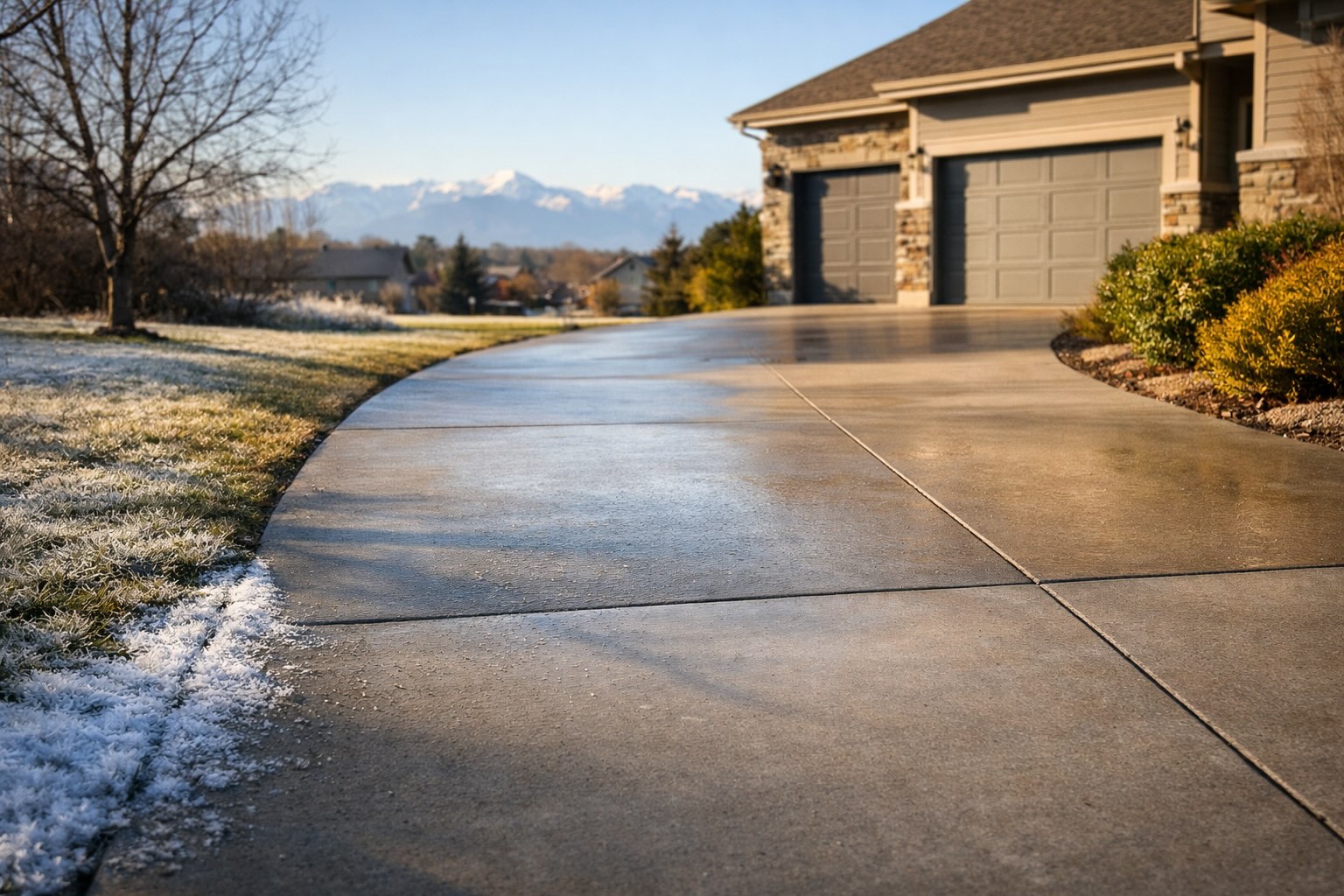
During winter, moisture enters small surface pores. When temperatures drop, water freezes and expands. As temperatures rise, it melts and contracts. This repeated expansion and contraction creates stress within the concrete.
Over time, that stress may lead to:
• Surface scaling
• Small cracks
• Joint widening
• Edge deterioration
However, freeze-thaw damage does not happen automatically. Proper preparation and finishing dramatically reduce risk.
Why Base Preparation Matters in Freeze-Thaw Conditions
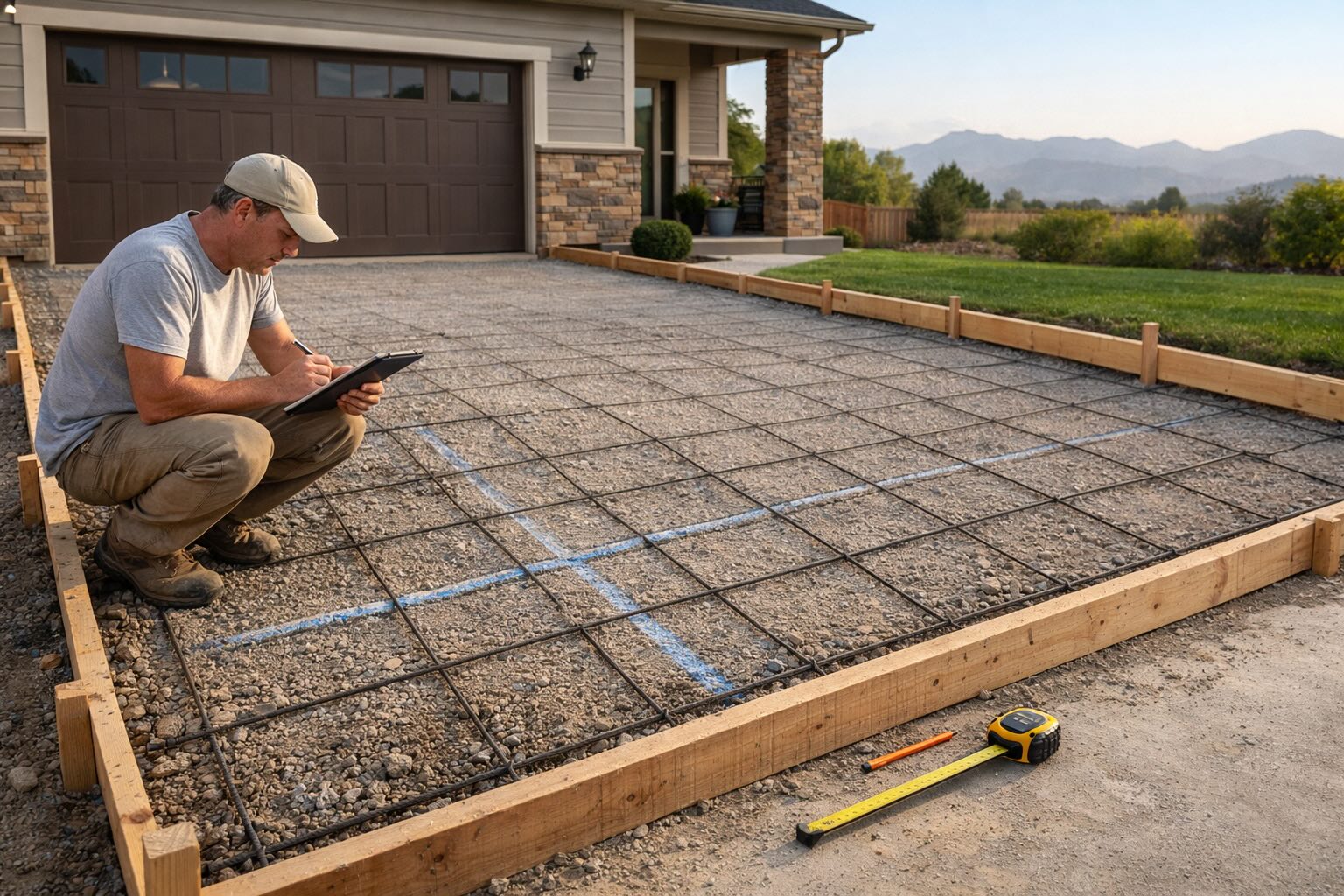
Concrete performs best when installed on a stable base.
In Denver, soil movement combined with freezing moisture can cause shifting. If the base beneath the slab is poorly compacted, concrete may settle unevenly.
Therefore, proper excavation and compaction matter more than many homeowners realize.
A well-prepared base:
• Reduces water pooling
• Minimizes soil movement
• Improves long-term stability
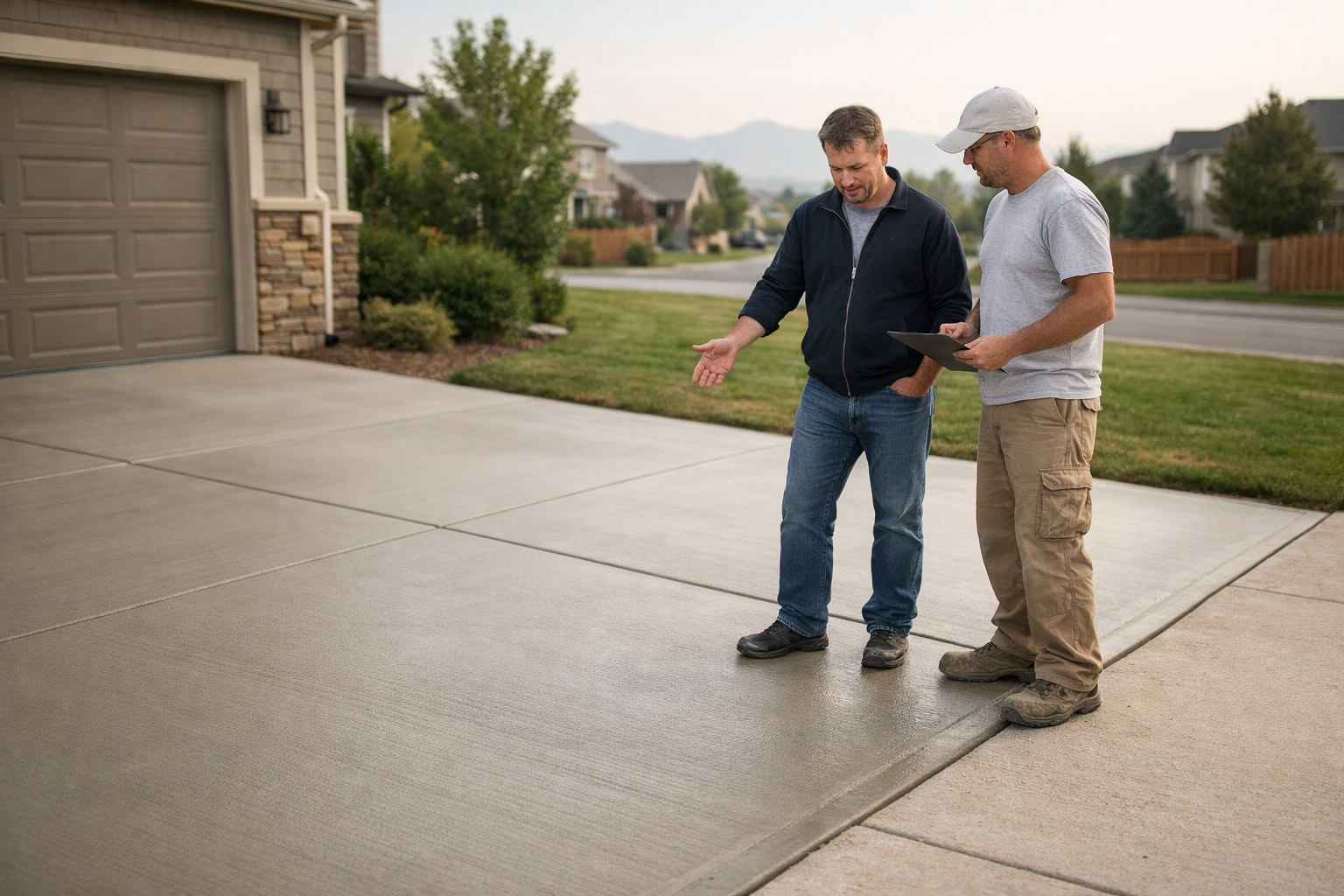
When reviewing estimates, always ask how the contractor plans to handle base preparation.
Temperature Swings and Concrete Expansion
Denver weather often shifts dramatically within a single day. Warm afternoons can quickly turn into cold evenings.
Because concrete expands when warm and contracts when cold, temperature swings create natural movement. That movement requires proper joint placement.
The Role of Control Joints
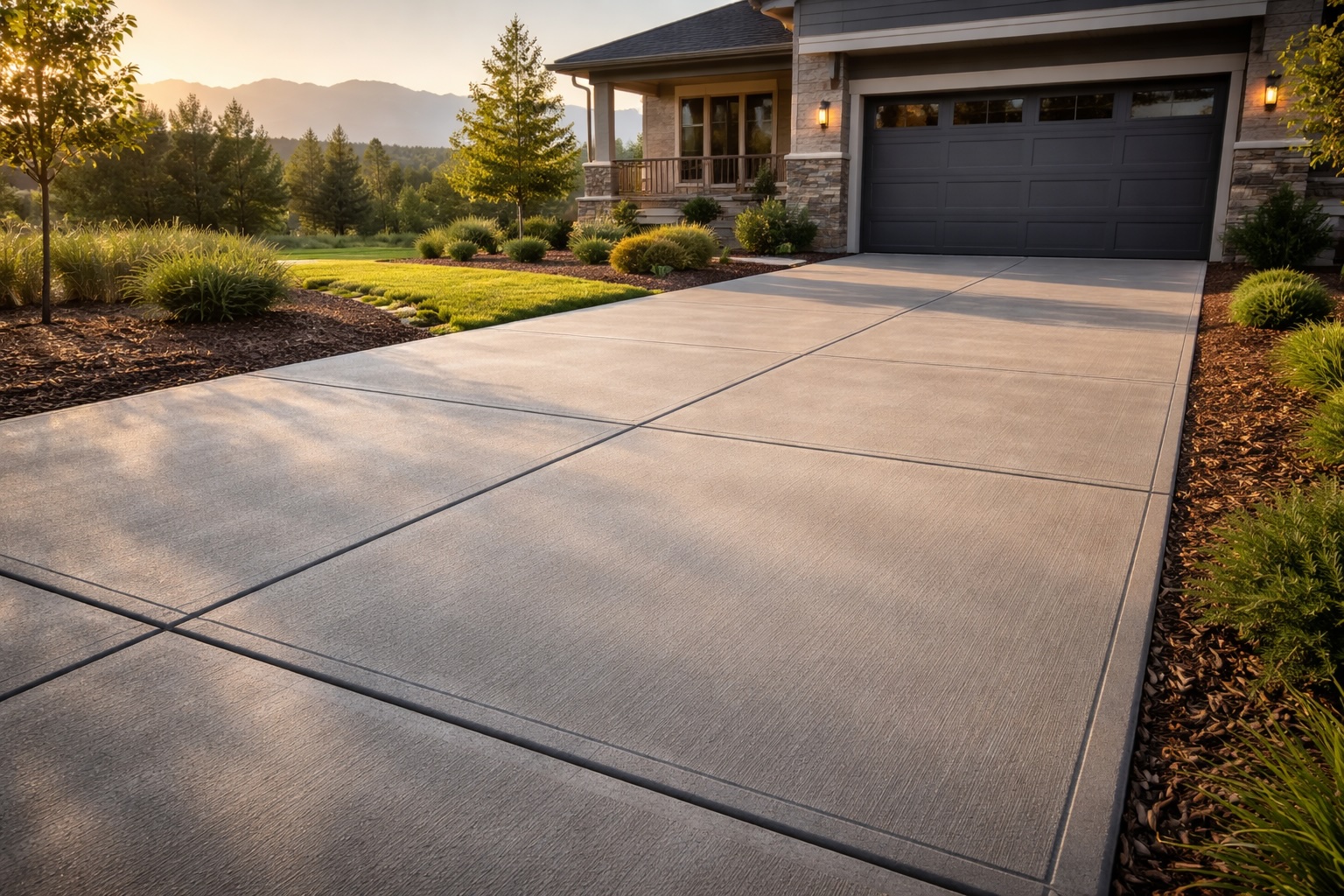
Control joints help guide cracking. Although cracks can occur naturally, joints encourage them to form in planned locations.
When control joints are spaced correctly, they:
• Improve appearance
• Reduce uncontrolled cracking
• Protect structural integrity
Without proper joints, stress may appear randomly across the surface.
Snow, Ice, and Deicing Products
Winter maintenance affects residential concrete in Denver.
Snow Removal
Mechanical snow removal rarely damages properly installed concrete. However, aggressive metal shovels or heavy equipment may scratch surfaces.
Using plastic-edged tools reduces surface wear.
Deicing Products
Some deicers contain chemicals that accelerate surface deterioration. Repeated exposure may cause scaling over time.
Homeowners should use deicers carefully and follow product recommendations.
Sun Exposure and UV Impact
Many people focus on winter, yet Denver sunlight also plays a role.
Because the city sits at high elevation, UV exposure is stronger than in many regions. Over time, intense sun can fade certain decorative finishes.
Concrete with proper sealing maintains appearance longer.
Additionally, lighter-colored finishes often reflect heat more effectively than darker tones.
Best Time of Year to Pour Concrete in Denver
Timing influences performance.
Spring and Early Fall
These seasons typically offer moderate temperatures. As a result, curing conditions remain more stable.
Summer Considerations
High heat accelerates curing. Although faster curing may seem beneficial, rapid moisture loss can increase surface cracking risk.
Experienced contractors adjust techniques during hot weather. For example, they may pour earlier in the day.
Winter Considerations
Cold weather slows curing. However, professionals can still pour concrete when temperatures allow and proper precautions are taken.
Planning matters more than season alone.
How Moisture Impacts Concrete Longevity
Moisture plays a dual role in concrete performance.
During curing, moisture strengthens concrete. After curing, uncontrolled moisture may create long-term challenges.
Drainage Planning
Proper slope prevents water from pooling near your home.
A correctly installed driveway or patio should direct water away from structures. In addition, surrounding landscaping should support natural runoff.
Before installation, ask how grading will be handled.
Reinforcement and Weather Resistance
Reinforcement strengthens concrete under stress.
Depending on your project, reinforcement may include:
• Rebar
• Wire mesh
• Fiber reinforcement
Although reinforcement does not eliminate cracking entirely, it improves load distribution and durability.
In Denver’s climate, reinforcement adds valuable long-term protection.
Common Weather-Related Concrete Problems
Understanding potential issues helps homeowners recognize early warning signs.
Surface Scaling
Scaling appears as flaking or peeling on the surface. Freeze-thaw cycles combined with deicers often cause it.
Hairline Cracks
Small cracks can occur naturally as concrete cures. Proper joint placement limits their impact.
Settlement Cracks
Poor base preparation may cause sections to sink slightly. Addressing base stability during installation reduces this risk.
How Proper Installation Prevents Weather Damage
While weather cannot be controlled, installation quality can.
A strong residential concrete contractor in Denver should focus on:
• Adequate base depth
• Thorough compaction
• Correct reinforcement
• Proper joint spacing
• Careful curing
• Drainage planning
These factors protect against Colorado’s climate challenges.
If you would like to evaluate how your property conditions may affect installation, request a review through our Free Concrete Estimate Page.
Maintenance Tips for Denver Homeowners
Even well-installed concrete benefits from basic maintenance.
Keep Surfaces Clean
Regular cleaning prevents debris buildup that traps moisture.
Monitor Joints
Inspect joints annually. Address small issues early before they expand.
Consider Sealing
Sealing adds protection against moisture penetration and UV exposure.
Avoid Harsh Chemicals
Use deicing products responsibly. Follow manufacturer recommendations.
Why Local Experience Matters
Concrete behaves differently in Colorado than in milder climates.
Local contractors understand:
• Soil variations
• Elevation effects
• Temperature swings
• Seasonal timing
Because of this knowledge, they can adjust preparation and finishing accordingly.
When hiring a residential concrete contractor in Denver, climate awareness should be part of the conversation.
Final Thoughts
Colorado weather presents unique challenges for residential concrete. Freeze-thaw cycles, temperature swings, moisture exposure, and intense sun all influence long-term performance.
However, proper preparation and installation dramatically reduce risk.
By understanding how weather affects concrete in Denver, homeowners can make informed decisions before installing a driveway or patio.
If you are planning a residential project in the Denver Metro area, start with a clear evaluation so you can move forward confidently. You can request a detailed assessment through our Free Residential Concrete Quote page.
Strong concrete begins with smart planning and climate awareness.